- Finding
- Users must navigate several steps to complete a frequently used task.
- Impact
- The additional complexity may increase effort and create opportunities for errors.
- Recommendation
- Review the workflow, remove unnecessary decisions, and make the primary action easier to identify.
- Priority
- Example priority: Validate based on user impact and implementation effort.
Find what will move your product forward
A focused, one-week product audit for B2B SaaS and AI teams. Identify UX friction, product gaps, and opportunities for growth, then leave with a prioritized plan your team can act on.
One week. Clear priorities. Actionable recommendations.

Your product works, but could it work better?
As products grow, friction accumulates. Important workflows become harder to navigate, priorities become less clear, and teams can lose sight of what matters most to users.
Users get stuck
Confusing workflows, unclear decisions, and unnecessary steps make important tasks harder than they need to be.
Growth feels harder
Unresolved UX issues can create friction in activation, adoption, and retention. The real causes may be difficult to identify.
Priorities compete
Teams have more improvement ideas than available time. Without a clear hierarchy, effort can spread across low-impact work.
Decisions lack clarity
Product discussions become less productive when assumptions, user evidence, and business priorities are not clearly connected.
A focused audit helps turn scattered observations into a clearer picture of what to improve first.
Clarity your team can act on
The audit combines product thinking, UX analysis, and practical prioritization. You receive a structured assessment of the product, with recommendations designed to support real decisions rather than generate another backlog of ideas.
Product and UX assessment
A structured review of key product journeys, usability, information architecture, and interaction patterns to identify friction and inconsistencies.
Critical journey analysis
A closer look at the workflows that matter most to your users and business, highlighting unnecessary steps, confusing decisions, and potential blockers.
Prioritized findings
A clear distinction between critical issues, meaningful improvements, and lower-priority refinements, based on user impact, business relevance, and implementation effort.
Actionable recommendations
Specific recommendations that explain what should change, why it matters, and how the team can approach the improvement.
Visual examples
Annotated screenshots, flow illustrations, or targeted interface examples where useful to clarify the problem and demonstrate a possible direction.
Roadmap and readout
A final review of the findings, recommended next steps, and a practical sequence for moving from assessment to implementation.
The outcome is not a longer list of tasks. It is a clearer understanding of where your team should focus next.
Five days from questions to priorities
A structured engagement keeps the work focused, the collaboration lightweight, and the outcome practical.
- Day 1
Align
We establish the product context, business objectives, target users, critical journeys, and the questions the audit needs to answer.
- Day 2
Investigate
I review the agreed product scope, analyze key workflows, and identify usability issues, inconsistencies, and areas that require closer examination.
- Day 3
Synthesize
I connect the findings, assess their likely impact, distinguish symptoms from underlying issues, and identify the most meaningful improvement opportunities.
- Day 4
Prioritize
I translate the findings into practical recommendations, organize them by priority, and outline the actions that deserve attention first.
- Day 5
Present
We review the results, discuss the recommendations, resolve questions, and establish a clear direction for the next phase of product improvement.
Focused work Minimal disruption
Your team does not need to pause product development for a week. The audit is designed to fit around existing work, with a small number of focused touchpoints and access to the information needed to assess the agreed scope.
Kickoff
A focused conversation to align on objectives, context, and the most important product journeys.
Context and access
Relevant product access, documentation, analytics, or existing research, where available and appropriate.
Final readout
A working session to review findings, discuss recommendations, and agree on next steps.
The exact time commitment depends on product complexity, scope, and the availability of relevant materials.
Built for teams ready to improve
The most valuable audits start with a real product challenge, access to the relevant context, and a willingness to act on what the evidence reveals.
Good fit
- B2B SaaS companies with an established product.
- AI startups moving from an early release toward a more mature experience.
- Product teams facing usability friction or unclear priorities.
- Founders and product leaders who need an independent perspective.
- Teams preparing a redesign, improving critical journeys, or reassessing product direction.
- Organizations willing to discuss findings and consider practical improvements.
Not the right fit
- Teams looking for a complete redesign within one week.
- Projects without a sufficiently defined product scope.
- Organizations expecting guaranteed revenue growth or conversion improvements.
- Teams seeking a large-scale implementation rather than an assessment.
- Projects without the access or context needed to evaluate the agreed product areas.
A short conversation can establish whether the audit is the right next step for your product.
Check Fit for Your ProductProduct thinking grounded in practice
The audit draws on experience across complex SaaS products, enterprise environments, and the workflows people rely on to get their work done.
manage.ID
Novexx Solutions GmbH · Industrial enterprise software + PWA
Industrial identification and labeling for factory floors, where operators work in gloves, under time pressure, and with zero tolerance for error.
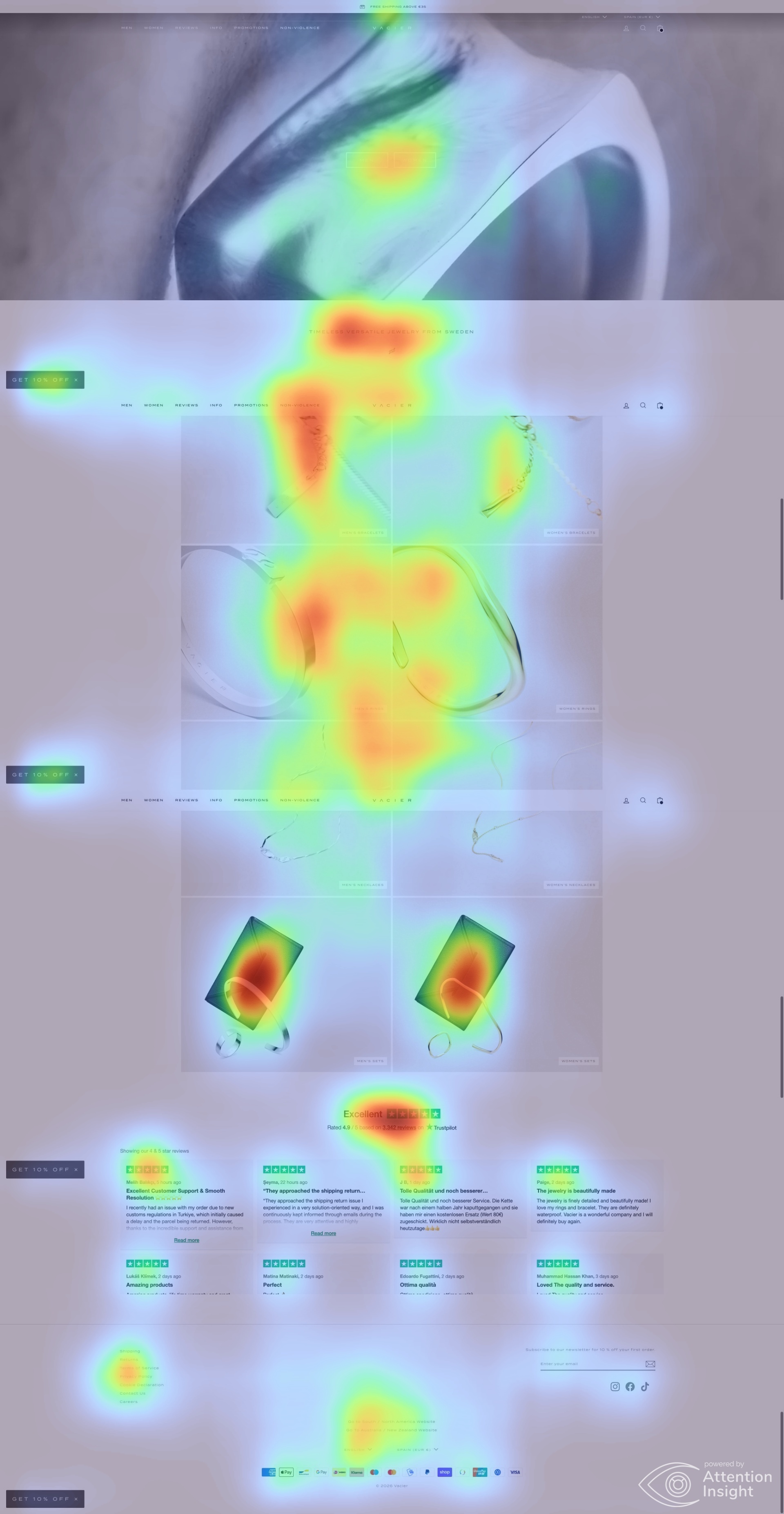
Vacier.com
D2C jewelry eCommerce · Shopify, web and mobile
A UX/UI and CRO product assessment of a branded catalog, covering attention, clarity, and contrast analysis alongside strategic recommendations.
Centene Corp.
Healthcare ERP · State and national health plan solutions
Enterprise healthcare software supporting the operational workflows behind state and national health plans.
RoleDesign LeadDec 2018 – Nov 2020
NDA-protected materials
Make the reasoning visible
A useful audit does more than identify a problem. It explains why the problem matters, what should change, and how the team can decide what to do next.
A defined scope A clear outcome
The audit is a focused engagement designed to assess an agreed part of your product and deliver prioritized recommendations within one week.
- Duration
- One week
- Scope
- Agreed product areas, key user journeys, and the questions that matter most to your team.
- Deliverables
- Structured findings, prioritized recommendations, supporting examples where useful, and a final readout.
- Collaboration
- A focused kickoff, access to relevant context, and a final review session.
- Investment
- The final fee and scope should be confirmed before the engagement begins.
Turn insight into action
The audit gives your team a clearer basis for deciding what to improve. The next step depends on your priorities, resources, and the work already planned.
Any follow-on work is optional and should be agreed separately.
Before you get started
What is a 1-Week Product Audit?
It is a focused review of an agreed part of your product. The goal is to identify meaningful UX and product issues, understand their implications, and provide prioritized recommendations your team can use to plan improvements.
What types of products do you work with?
The service is designed primarily for B2B SaaS products, AI-enabled products, and complex digital workflows. The best fit depends on the product, its maturity, the questions you need answered, and the scope we agree on.
What do you need from our team?
Typically, a kickoff conversation, access to the relevant product areas, and any useful documentation, analytics, or existing research. The exact requirements depend on the scope and what information is available.
How much time will our team need to commit?
The engagement is designed to minimize disruption to ongoing work. Your team will need to provide context, answer relevant questions, and participate in a final readout. The expected time commitment should be agreed before the audit begins.
Do you redesign or implement the recommendations?
The audit focuses on assessment, prioritization, and recommendations. Specific design or implementation work can be discussed separately if it is useful and appropriate for your team.
Can you guarantee improvements in conversion or retention?
No specific business outcome can be guaranteed by an audit alone. The work identifies potential improvements and provides a clearer basis for deciding what to change. Results depend on implementation, product context, user behavior, and other factors.
Is the audit suitable for an early-stage startup?
It can be suitable if the product has enough substance to evaluate and the team has clear questions to investigate. If the product is still at the idea stage, a different type of product discovery engagement may be more appropriate.
What happens after I submit an application?
Your application provides the context needed to assess fit and understand your main product challenge. If the engagement looks appropriate, the next step is to clarify the scope, expected deliverables, timing, and commercial terms before confirming the work.
How is the audit priced?
The fee depends on the agreed scope and engagement terms. The exact price and payment arrangements should be confirmed before the engagement begins.
Tell me about your product
Share a little context about your product and the challenge you are trying to solve. This will help establish whether a one-week audit is the right fit.